King Sejong the Great
The 4th King of the Joseon Dynasty and the Creator of Hangul
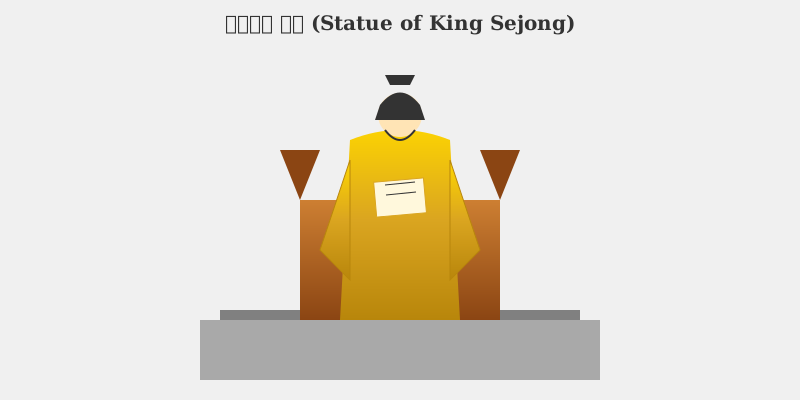
Who was King Sejong?
King Sejong (1397–1450) is one of the most beloved and respected figures in Korean history. He reigned from 1418 until his death. His rule is often called the "Golden Age of Korean Culture" because of his immense contributions to science, technology, literature, and most importantly, the creation of the Korean alphabet, Hangul.
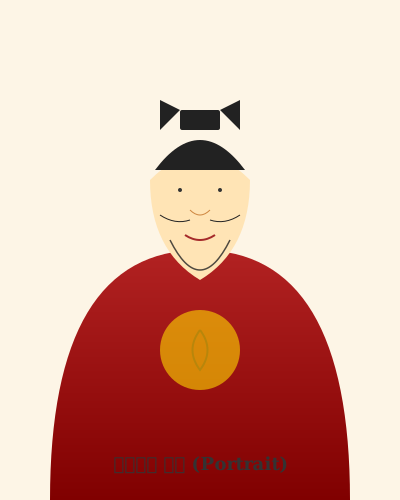
The Creation of Hangul (1443)
Before Hangul was created, Koreans used Chinese characters (Hanja) for writing. However, Chinese characters were very difficult to learn, meaning only the wealthy and elite could read and write. Most of the common people were illiterate.
King Sejong felt deep compassion for his people and wanted everyone to be able to express their thoughts and feelings in writing. Despite strong opposition from noble scholars, he independently developed a scientific and easy-to-learn phonetic alphabet.
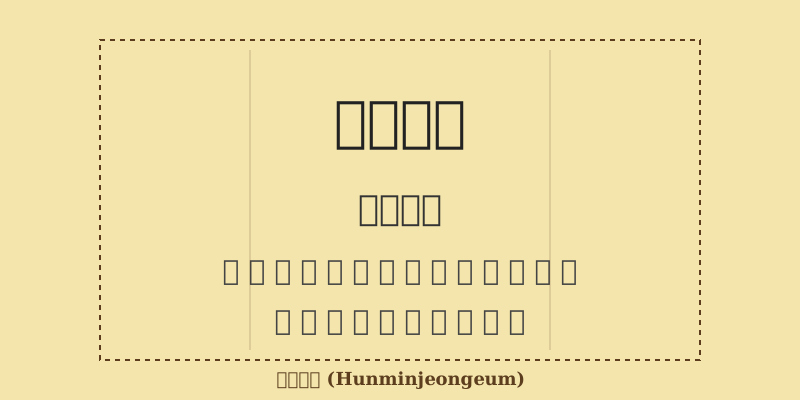
Hangul was originally called Hunminjeongeum, which means "Proper sounds to instruct the people." It consists of 24 basic letters (14 consonants and 10 vowels) designed to represent the shape of the vocal organs during speech.
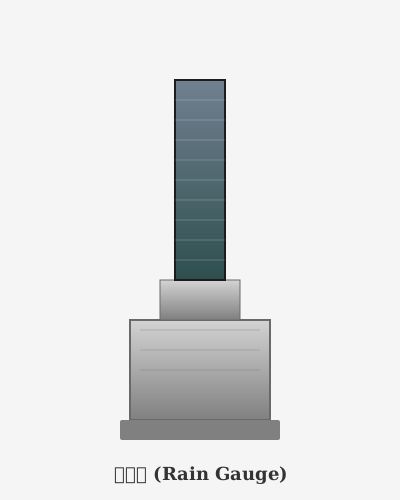
Scientific Achievements
King Sejong was also a great scientist and inventor. Along with the famous scientist Jang Yeong-sil, he developed many revolutionary tools:
- Cheugugi: The world's first standardized rain gauge to help farmers.
- Honcheonui: A celestial globe to study astronomy.
- Angbuilgu: A sundial to help people tell time.
- Improvements in moveable type printing and musical notation.